- Editor

- CategoryEssay
- DateDecember 28, 2025
Technology has become deeply embedded in modern pharmacy operations. From electronic prescribing and automated dispensing systems to clinical documentation tools and patient communication platforms, technology now touches nearly every step of the medication-use process. These tools have delivered real benefits, improving safety, efficiency, and access in meaningful ways.
At the same time, technology has not solved many of the core pressures facing pharmacies. In some cases, it has shifted work rather than reduced it, or introduced new layers of complexity that require human intervention. Understanding where pharmacy technology succeeds and where it continues to fall short is essential for setting realistic expectations and designing better workflows.
Where Technology Has Clearly Helped
Electronic prescribing has been one of the most impactful advancements in pharmacy practice. Compared to handwritten prescriptions, e-prescribing has reduced errors related to illegibility, incomplete directions, and missing information. It has also improved transmission speed and created a digital trail that supports auditing and compliance.
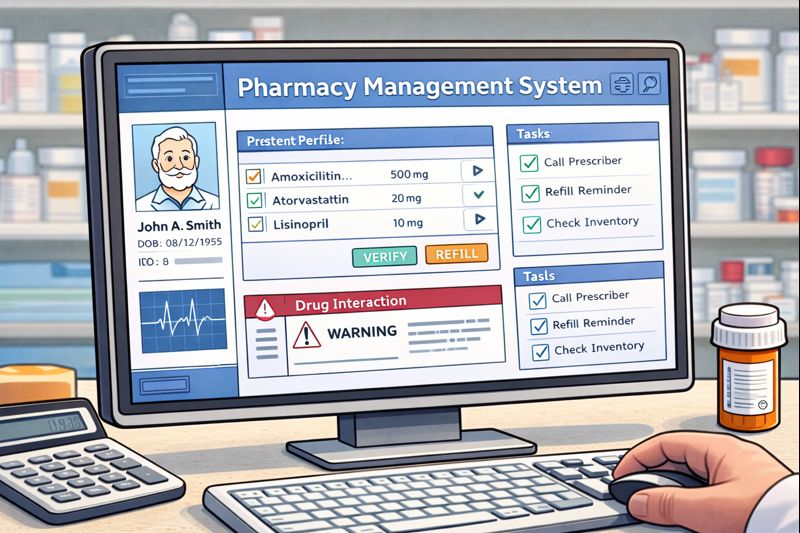
Clinical decision support tools have also contributed to medication safety. Drug interaction alerts, allergy checks, and duplicate therapy warnings help pharmacists identify potential issues that might otherwise be missed, especially in high-volume environments. While these systems are not perfect, they provide a baseline layer of protection that supports clinical judgment.
Automation has delivered efficiency gains in specific, well-defined tasks. Automated dispensing cabinets, counting machines, and barcode verification systems reduce repetitive manual work and improve accuracy when used appropriately. Inventory management systems help pharmacies track stock levels and reduce some forms of waste, particularly for high-cost medications.
Technology has also expanded patient access. Online refill requests, digital reminders, and patient portals allow patients to engage with pharmacies outside traditional hours. Telepharmacy models have improved access in rural or underserved areas, extending pharmacist oversight where physical staffing may not be feasible.
Where Technology Has Fallen Short
Despite these advances, technology has not reduced the overall workload in pharmacies to the extent many expected. One major limitation is fragmentation. Pharmacy systems often operate as separate tools that do not communicate seamlessly with one another. Pharmacists and technicians may need to navigate multiple platforms to complete a single task, increasing cognitive load and the risk of error.
Alert fatigue is another persistent issue. While clinical decision support is valuable, excessive or poorly calibrated alerts can overwhelm staff and obscure genuinely important warnings. When nearly every prescription triggers multiple alerts, it becomes difficult to distinguish meaningful risks from background noise.
Technology has also struggled to handle the unstructured, unpredictable nature of pharmacy work. Many of the most time-consuming tasks, such as clarifying prescriptions, resolving insurance issues, managing prior authorizations, or addressing patient questions, still rely heavily on manual effort. These tasks often involve nuance, judgment, and back-and-forth communication that current systems are not well designed to manage.
Documentation requirements have increased alongside technological adoption. Rather than simplifying workflows, some systems require additional data entry to satisfy billing, compliance, or reporting needs. In these cases, technology can feel less like a support tool and more like an additional obligation layered onto an already busy day.
The Gap Between Technology and Workflow Reality
One reason technology falls short is that many pharmacy systems were designed around static processes rather than dynamic workflows. They assume predictable inputs and linear task progression, while real-world pharmacy work is interruption-driven and highly variable.
For example, a system may efficiently process a prescription once all information is complete, but offer little support when information is missing, conflicting, or delayed. In those situations, human intervention is still required, often involving phone calls, documentation, and follow-up that sit outside the core system.
Additionally, technology often shifts responsibility rather than eliminating it. Automated systems may flag issues, but pharmacists remain responsible for resolving them. Digital communication tools may increase message volume without reducing the need for real-time clarification. As a result, efficiency gains in one area may be offset by new demands in another.
Equity and Access Considerations
Technology adoption also raises equity concerns. Not all patients are comfortable with digital tools, patient portals, or automated systems. Older adults, individuals with limited digital literacy, or patients without reliable internet access may struggle to engage with technology-dependent workflows.
Pharmacies must often maintain parallel processes, supporting both digital and traditional interactions. This dual burden can limit the efficiency gains technology is intended to provide.
What Technology Is Still Not Designed to Do
Technology is effective at handling structured, repetitive tasks with clear rules. It is far less effective at managing ambiguity, context, and human emotion. Tasks such as assessing prescription legitimacy, balancing regulatory risk, counseling anxious patients, or navigating conflicting priorities remain firmly in the human domain.
Pharmacy technology has also not adequately addressed workload distribution. Many systems optimize individual steps but do not reduce the overall volume of interruptions, communications, and compliance decisions that drive stress and burnout.
Looking Forward Without Overpromising
Future improvements in pharmacy technology will likely focus on better system integration, smarter prioritization of alerts, and tools that reduce administrative burden rather than simply digitizing it. Progress will depend not only on more advanced software, but on thoughtful design grounded in how pharmacies actually operate.
Technology alone will not solve reimbursement challenges, staffing shortages, or regulatory complexity. It can support pharmacies, but it cannot replace clinical judgment or eliminate systemic pressures.